
Understanding the Procedures
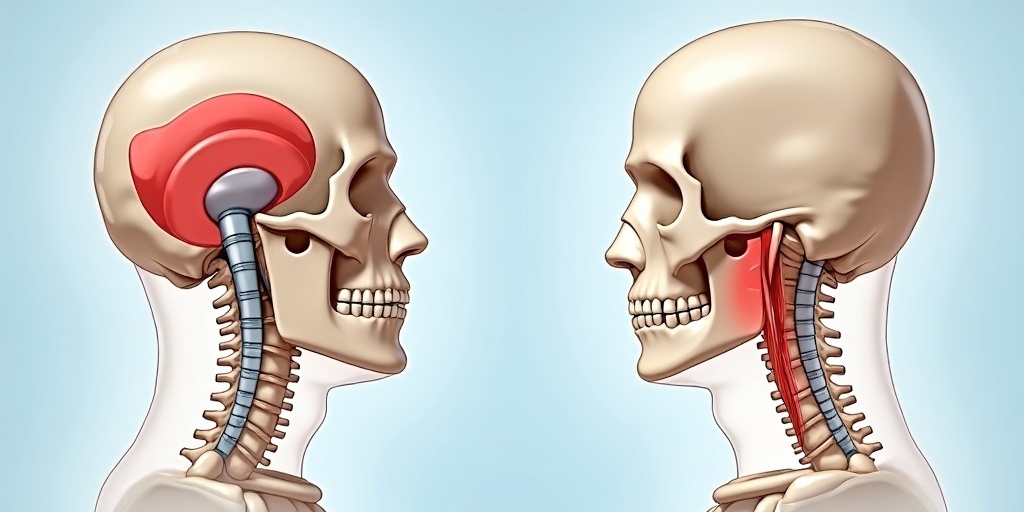
When conservative treatment fails for cervical radiculopathy or cervical myelopathy, surgery becomes necessary. The two primary options are cervical disc replacement (CDR) and anterior cervical discectomy and fusion (ACDF). Both procedures address the same problems but take fundamentally different approaches.
Cervical Disc Replacement (CDR)
Removes the damaged disc and replaces it with an artificial disc that maintains motion at that spinal level.
- • Preserves natural neck movement
- • May reduce adjacent segment disease
- • Faster return to activities
- • Stricter candidate requirements
ACDF (Fusion)
Removes the damaged disc and fuses the vertebrae together with a bone graft or cage, eliminating motion.
- • Proven long-term track record
- • Works for complex cases
- • Excellent stability
- • Broader candidate pool
The Common Ground
Both procedures use the same surgical approach (through the front of the neck), remove the damaged disc material, and decompress the spinal cord and nerve roots. The key difference lies in what happens next—motion preservation versus fusion.
Motion Preservation vs Fusion
The fundamental philosophical difference between these procedures centers on motion. Your cervical spine normally allows for complex movements—flexion, extension, rotation, and lateral bending. How each procedure handles this motion has important implications.
Motion Preservation with CDR
Cervical disc replacement aims to restore normal disc height and maintain physiologic motion. Modern artificial discs are designed to mimic the natural movement patterns of a healthy disc.
Benefits of Motion Preservation:
- Maintains normal neck biomechanics
- Potentially reduces stress on adjacent levels
- Faster return to full activities
- No bone graft healing required
Stability Through Fusion
ACDF creates a solid fusion between vertebrae, eliminating motion at the treated level. While this removes natural movement, it provides excellent stability and has decades of proven success.
Benefits of Fusion:
- Proven long-term success (40+ years of data)
- Excellent for complex deformities
- Works well for multi-level disease
- Suitable for patients with arthritis
Adjacent Segment Disease
One theoretical advantage of CDR is reducing adjacent segment disease—the breakdown of discs above or below a fusion. While fusion increases stress on neighboring levels, the clinical significance of this difference is still being studied in long-term research.
Candidate Selection Criteria
Not everyone is a candidate for both procedures. Patient selection is crucial for optimal outcomes, and several factors influence which procedure is most appropriate.
Ideal CDR Candidates
Age
Typically under 60 years old with good bone quality
Disease Pattern
Single-level disease with preserved disc height
Anatomy
Normal cervical alignment, minimal arthritis
Activity Level
Active lifestyle, wants to maintain motion
Ideal ACDF Candidates
Age
Any age, especially over 60 or with osteoporosis
Disease Pattern
Multi-level disease, severe degeneration
Anatomy
Kyphosis, instability, significant arthritis
Previous Surgery
Prior cervical fusion, complex revision cases
Contraindications for CDR
- • Significant cervical kyphosis
- • Facet joint arthritis
- • Osteoporosis or poor bone quality
- • Active infection
- • Previous fusion at adjacent level
- • Severe disc space collapse
- • Metabolic bone disease
- • Allergy to implant materials
Surgical Technique Comparison
Both procedures begin with the same approach—a small incision in the front of the neck to access the cervical spine. The techniques diverge after disc removal and neural decompression.
CDR Technique
- 1Careful disc removal preserving endplates
- 2Neural decompression
- 3Precise endplate preparation
- 4Artificial disc insertion and positioning
- 5Motion testing and closure
ACDF Technique
- 1Complete disc removal
- 2Neural decompression
- 3Endplate preparation for fusion
- 4Cage and graft insertion
- 5Plate fixation and closure
Technical Considerations
CDR Precision Requirements
- • Exact sizing and positioning critical
- • Endplate preservation essential
- • Center of rotation must be maintained
- • Immediate motion testing required
ACDF Fusion Optimization
- • Thorough endplate preparation
- • Optimal graft selection
- • Proper lordosis restoration
- • Secure plate fixation
Recovery and Rehabilitation
Recovery timelines and restrictions differ significantly between the two procedures, primarily due to the need for bone healing in ACDF versus immediate stability with CDR.
CDR Recovery Timeline
Week 1-2
Light activities, gentle neck motion encouraged
Week 2-6
Gradual return to normal activities, no collar needed
Week 6-12
Full activities including sports and heavy lifting
ACDF Recovery Timeline
Week 1-6
Collar wear, limited neck motion, light activities
Week 6-12
Gradual activity increase, fusion assessment
Month 3-6
Full activities once fusion is confirmed
Key Recovery Differences
CDR Advantages
- • No collar required
- • Immediate motion allowed
- • Faster return to work
- • Earlier sports participation
ACDF Considerations
- • Collar protection needed
- • Fusion healing required
- • Gradual activity progression
- • Follow-up imaging important
Long-term Outcomes and Research
Both procedures have excellent success rates, but the data differs in depth and duration. ACDF has over 40 years of follow-up data, while CDR has robust 10-15 year studies with ongoing research.
CDR Success Rate
Excellent outcomes at 10+ years
ACDF Success Rate
Proven long-term results
Revision Rate
Both procedures (similar rates)
Research Findings
Motion Preservation Studies
Long-term studies show CDR maintains 70-80% of normal motion at the treated level. This preserved motion may reduce stress on adjacent segments, though the clinical benefit is still being quantified.
- • Maintained flexion-extension motion
- • Preserved center of rotation
- • Reduced adjacent segment stress
Fusion Success Data
ACDF achieves solid fusion in 95-98% of cases with modern techniques. The extensive long-term data provides confidence in durability and patient satisfaction.
- • Excellent fusion rates with modern grafts
- • Durable pain relief
- • Predictable outcomes
Adjacent Segment Disease
While CDR theoretically reduces adjacent segment disease risk, recent studies show the difference may be smaller than initially thought. Both procedures can lead to adjacent level changes over time, though the clinical significance varies.
Making the Right Decision
The choice between CDR and ACDF should be individualized based on your specific anatomy, lifestyle, and goals. Here's how to approach this important decision.
Decision Framework
Consider CDR If:
- You're under 60 with good bone quality
- Single-level disease with preserved disc height
- Normal cervical alignment
- Active lifestyle, want to maintain motion
- Prefer faster recovery
Consider ACDF If:
- Multi-level disease or complex anatomy
- Significant arthritis or instability
- Previous cervical surgery
- Prefer proven long-term track record
- Don't mind motion restriction
Questions to Discuss with Your Surgeon
- Am I a candidate for both procedures?
- What are the specific risks for my case?
- How will each procedure affect my daily activities?
- What's your experience with each procedure?
- What would you choose for yourself or a family member?
Frequently Asked Questions
What is the main difference between cervical disc replacement and ACDF?
The main difference is motion preservation. Cervical disc replacement maintains natural neck movement with an artificial disc, while ACDF fuses vertebrae together, eliminating motion at that level but providing excellent stability.
Who is a good candidate for cervical disc replacement?
Good candidates are typically under 60, have single-level disease, good bone quality, no significant arthritis, and want to maintain neck motion. ACDF may be better for older patients or those with multi-level disease.
Which procedure has better long-term outcomes?
Both procedures have excellent long-term outcomes with over 90% success rates. CDR may reduce adjacent segment disease risk, while ACDF has longer track record and works well for complex cases.
How long does recovery take for each procedure?
CDR typically allows faster return to activities (6-8 weeks) with no collar required. ACDF requires collar wear and gradual progression, with full activities usually allowed after 3-6 months once fusion is confirmed.
Can artificial discs wear out or fail?
Modern artificial discs are designed to last decades. While wear can occur over time, clinical studies show excellent durability at 10+ years. Revision rates are similar to ACDF, typically under 5%.
What if I need surgery at another level later?
Both CDR and ACDF can be combined with other procedures if needed. Having one procedure doesn't prevent future surgery at other levels, though the specific approach may be influenced by your previous surgery.
Have questions about your spine?
I prioritize the least invasive option that truly solves the problem. Join the waitlist and we'll notify you when appointments open.
