Meet Dr. Marc Greenberg
A fellowship-trained spine surgeon in Fort Wayne focused on doing the least-disruptive operation that solves the problem — and on telling you honestly when you don’t need one.
Marc Greenberg, MD provides orthopedic spine consultations through Orthopaedics Northeast, with appointments in Fort Wayne, Bryan, Warsaw, and Angola, in partnership with Parkview Health. His work centers on matching the treatment to the anatomy and the patient’s goals, with an emphasis on minimally invasive, endoscopic, motion-preserving, and robotic-assisted techniques when they are appropriate.
For practice-maintained information about Dr. Greenberg, view his official Orthopaedics Northeast physician profile.
Training, stated precisely
Medical school — Mayo Clinic
Dr. Greenberg earned his medical degree at Mayo Clinic Alix School of Medicine. Medical school established the broad clinical foundation that precedes specialty training.
Orthopedic surgery residency — Johns Hopkins
He completed a five-year orthopedic surgery residency at The Johns Hopkins Hospital, with training across musculoskeletal diagnosis, trauma, reconstruction, perioperative care, and operative decision-making.
Spine surgery fellowship — Brown University
He then completed a dedicated spine surgery fellowship at Brown University.
Philosophy of care
Most spine problems do not begin with surgery. A good consultation should explain what the imaging shows, whether it fits the symptoms, what has already been tried, and which options remain. When an operation is warranted and the anatomy allows, a smaller-access or motion-preserving technique may reduce unnecessary tissue disruption. When fusion or a traditional exposure is the safer or more durable choice, that should be explained just as clearly.
Shared decision-making means discussing the likely benefit, the uncertainty, the alternatives, the tradeoffs, and the option of doing nothing immediately. A second opinion is welcome when a patient wants confirmation before a consequential decision.
What he treats
Sciatica, herniated disc, spinal stenosis, cervical radiculopathy and myelopathy, spondylolisthesis, SI joint pain, compression fractures, and conditions that have not settled with time or therapy. He also provides spine-surgery second opinions for patients across Indiana.
Research and professional participation
Research summaries on this site identify their sources and limitations rather than using publication names as marketing claims. Material is revised when a documented review occurs; the date and named reviewer appear only when that review has been recorded.
The same source-and-limits standard applies to short-form education. Use Dr. Greenberg’s guide to evaluating spine advice on social media before relying on an online claim.
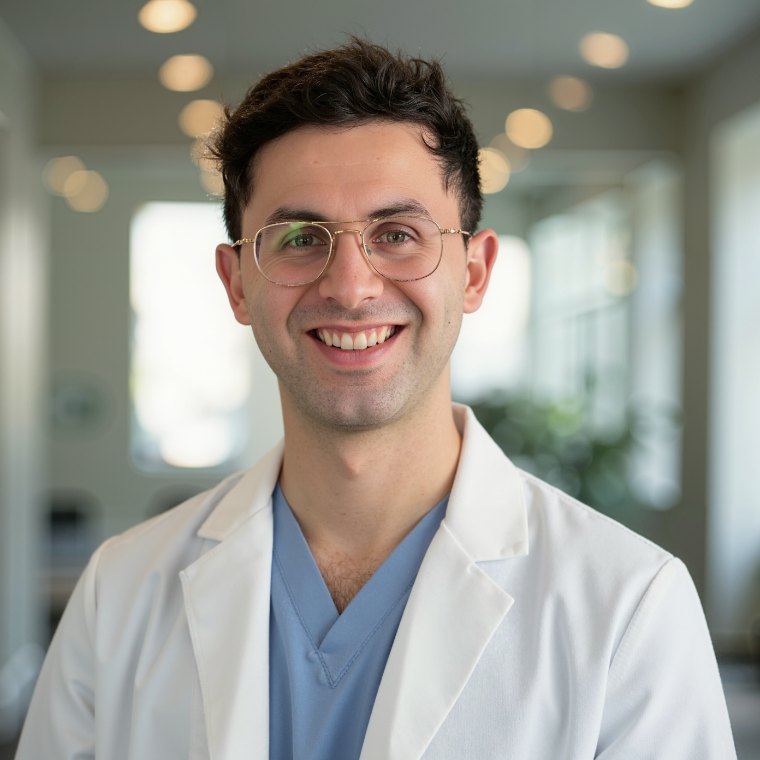
- Fellowship-trained spine surgeon
- MD: Mayo Clinic Alix School of Medicine
- Orthopedic residency: The Johns Hopkins Hospital
- Spine fellowship: Brown University
- Orthopaedics Northeast · Fort Wayne, IN
Frequently asked questions
What is Dr. Greenberg’s training?
Dr. Greenberg earned his medical degree at Mayo Clinic Alix School of Medicine, completed orthopedic surgery residency at The Johns Hopkins Hospital, and completed spine surgery fellowship at Brown University.
What does Dr. Greenberg specialize in?
He focuses on minimally invasive, motion-preserving, endoscopic, and robotic-assisted spine surgery for conditions such as sciatica, herniated disc, spinal stenosis, and neck and arm pain — and on honest guidance about when surgery is and isn’t needed.
Where does Dr. Greenberg practice?
He provides orthopedic spine consultations through Orthopaedics Northeast, in partnership with Parkview Health. He is accepting appointments at Fort Wayne North, Clinton, Southwest, Bryan, Warsaw, and Angola.
Does a consultation always lead to surgery?
No. Many spine problems improve without surgery. A consultation is meant to clarify the diagnosis, explain the options, and identify whether continued nonoperative care, another test, a targeted procedure, or surgery is reasonable.
Talk with a fellowship-trained spine surgeon
Most spine problems improve without surgery. When an operation is warranted, the goal is to match the least-disruptive effective option to the diagnosis and anatomy.