Robotic Spine Surgery in Fort Wayne: What Active Adults and Athletes Need to Know Before Saying Yes to Fusion
Quick Answer
Robotic-assisted spinal fusion uses a robotic arm to place stabilizing screws with 95–98% accuracy — reducing revision risk for active adults who plan to stay physically demanding for decades. It supports minimally invasive approaches with smaller incisions and earlier mobilization. However, fusion biology still takes 3–6 months regardless of technology. Dr. Marc Greenberg at Greenberg Spine in Fort Wayne offers robotic-assisted fusion for patients with spondylolisthesis, degenerative instability, or multilevel disease who genuinely need fusion — not as a default for every spine problem.
You're 44, you've been doing CrossFit for six years, and last year a lower back X-ray during a routine exam showed something you didn't expect: grade 2 spondylolisthesis at L4-5 — one vertebra slipped forward on the one below it. Your spine has been slowly shifting for years. Lately the leg pain is getting bad enough that you can't train through it. A spine surgeon tells you fusion is the path forward.
Your first question isn't about fusion. It's about how it's done: “I've heard about robotic surgery. Does that mean better outcomes? A smaller incision? Faster recovery? Can I get it here in Fort Wayne?”
These are the right questions. And the answers are more nuanced than a yes or no. This article explains what robotic-assisted fusion actually offers active adults, who genuinely benefits from the technology, what it does not change about recovery, and what the data shows — from a surgeon who performs it in Fort Wayne, Indiana, and has 15+ peer-reviewed publications on evidence-based spine surgery.
Disclaimer: This article is educational and does not constitute individualized medical advice. Outcomes vary. Consult a qualified spine surgeon to determine what is appropriate for your specific situation.
Key Takeaways
- Robotic-assisted fusion places screws with 95–98% accuracy — reducing revision risk for patients who plan to stay physically active for decades
- Robotic precision supports minimally invasive approaches: smaller incisions, less muscle disruption, earlier mobilization
- Fusion recovery is 3–6 months regardless of technology — bone biology can't be accelerated
- Ideal active adult candidates have spondylolisthesis, degenerative instability, or multilevel disease — not just disc herniation
- Many athletes and manual workers return to high-demand activity at 3–6 months post-fusion with proper clearance
Quick Answer
Robotic-assisted spinal fusion uses a robotic arm to help place stabilizing screws with exceptional accuracy — 95–98% vs 85–90% for traditional technique. This reduces re-operation risk, supports minimally invasive incisions, and may allow earlier mobilization. It does not accelerate fusion biology — bone still takes 3–6 months to solidify. For active adults with spondylolisthesis, instability, or multilevel disease who need fusion, robotic precision is a meaningful advantage. For patients whose problem is disc herniation or pure stenosis without instability, endoscopic or minimally invasive decompression (no hardware) is often the better path.
What Robotic-Assisted Spinal Fusion Actually Is
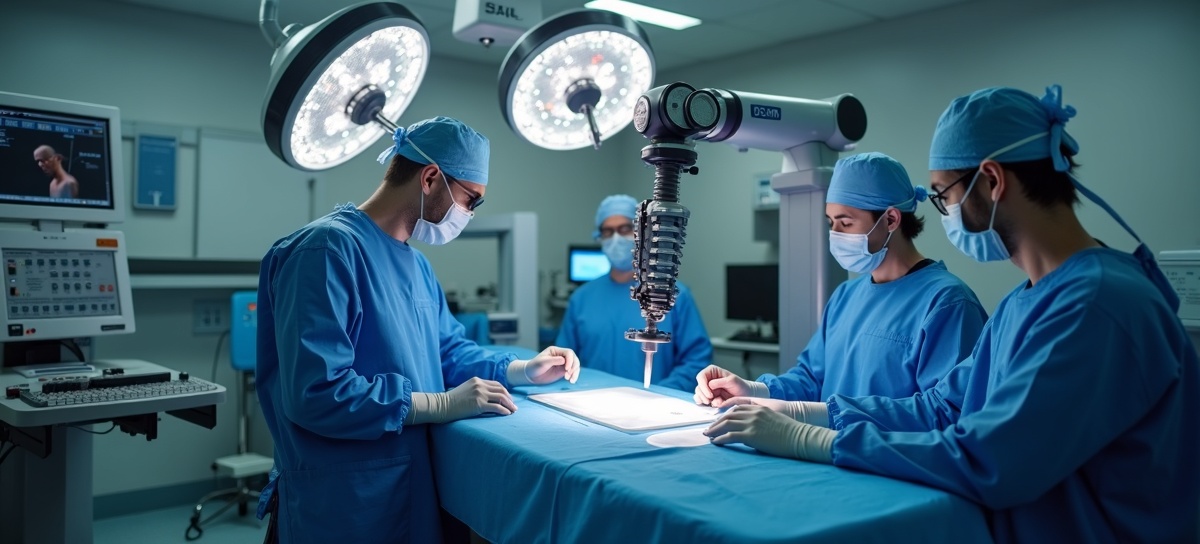
Let's separate the marketing from the mechanics. Robotic spine surgery does not mean the robot performs your operation. It means a robotic arm — guided by the surgeon — helps execute pre-planned screw trajectories with exceptional accuracy.
In a traditional spinal fusion, pedicle screws are placed freehand using anatomical landmarks and real-time X-ray guidance. In the hands of an experienced surgeon, this is highly effective. But the pedicle — the small bony corridor screws pass through — is a forgiving structure only if everything goes perfectly. A slightly off-trajectory screw can impinge on a nerve root, fail to achieve adequate fixation, or require correction.
Here's how robotic-assisted fusion works step by step:
Pre-operative CT Scan
A CT scan of your spine is imported into the robotic system's planning software. The surgeon digitally maps each screw's planned entry point, angle, depth, and diameter — reviewing and adjusting until the plan is precisely optimized for your anatomy.
Intra-operative Registration
In the OR, the robotic system is registered to your actual spinal anatomy using reference markers. This matches the digital plan to the real patient on the table. Accurate registration is critical — the robot is only as good as the map it's working from.
Robotic Guidance for Screw Placement
The robotic arm positions a guide tube along the pre-planned trajectory for each screw. The surgeon then places the screw through this guide — the robot ensures the drill and screw follow the exact planned path, not the surgeon's hand tremor or a slightly off angle in the moment.
Real-Time Verification
Accuracy is confirmed with imaging before and after screw placement. If anything is off, the surgeon adjusts before closing — the same rigor that applies regardless of technique, but with robotic assistance reducing how often adjustment is needed.
Fusion and Closure
Bone graft or a bone graft substitute is packed into the disc space alongside a structural cage. Over the next 3–6 months, the vertebrae grow together. The screws hold everything still during this biological process. The robot's job is over — healing is up to your body.
The net result: screws placed where they were planned, in complex anatomy as easily as straightforward anatomy, through smaller incisions, with less margin for the positioning errors that drive re-operations.
Who Qualifies — The Active Adult Candidacy Profile
This is the part most blog posts skip. Robotic-assisted fusion is a tool for patients who actually need fusion. If you don't need fusion, you don't need robotics — and there's no robotic shortcut that turns a decompression-only patient into a fusion candidate.
Who needs fusion? Patients with spinal instability — where the spine is moving in ways it shouldn't, causing pain and nerve compression that decompression alone won't fix. For active adults, this typically looks like one of these scenarios:
Isthmic Spondylolisthesis (Athletic Background)
A stress fracture of the pars interarticularis — common in gymnasts, football linemen, weightlifters, and dancers — allows one vertebra to slip forward. Low-grade slippage with minimal symptoms often doesn't need surgery. But when slippage progresses, causes persistent leg pain, or fails conservative care, fusion stabilizes the unstable segment. The robotic advantage here is precision placement in an anatomy that's already been altered by years of movement at an unstable level.
Degenerative Spondylolisthesis with Stenosis
Active adults 45–65 with leg pain that limits walking, standing, or any sustained activity often have a combination of disc degeneration, facet arthritis, and vertebral slippage. When decompression alone isn't sufficient because the instability would worsen, fusion is added. MIS robotic fusion in this group means less muscle disruption than traditional open surgery — often relevant for active people who want the fastest functional recovery.
Failed Prior Decompression with Instability
Patients who had laminectomy or discectomy years ago and now have recurrent symptoms due to progressive instability at the same level are revision fusion candidates. This anatomy is particularly challenging for freehand technique — altered landmarks, scar tissue, and unpredictable bone quality make robotic precision especially valuable here.
Multilevel Disease Requiring Instrumentation
When two or three adjacent levels all need fusion, the number of screws required and the importance of accurate placement multiplies. Robotic-assisted planning allows each screw's trajectory to be optimized individually before a single incision is made — something not possible with freehand technique.
Important: When Fusion Is Not the Right Answer
If your problem is a herniated disc causing sciatica, or spinal stenosis without significant instability, fusion is likely not indicated — and neither is robotic surgery. These patients are often excellent candidates for endoscopic discectomy or minimally invasive decompression without hardware. Getting this distinction right is more important than any technology used in the operating room.
Why Precision Matters More for Active Adults Than Anyone Else
Pedicle screw accuracy affects everyone who undergoes fusion — but it matters especially for active adults, and here's why.
A misplaced screw can irritate a nerve root, cause persistent leg pain indistinguishable from the original problem, or fail to achieve adequate fixation. The consequence is revision surgery — a second operation with more complexity, more risk, and a longer road back. Published data estimates malpositioned screws requiring clinical management occur in 1–3% of conventionally placed screws across large case series.
That sounds small. But consider: a 45-year-old CrossFitter who has a L4-5 fusion with four screws has a 1–3% risk per screw — compounded across all hardware. A 4-screw construct with a 2% malposition rate per screw means roughly an 8% chance of at least one screw needing attention over time. Robotic accuracy rates of 95–98% reduce that probability meaningfully.
More importantly, active adults put more mechanical stress on their hardware over their remaining lifetime than sedentary patients. The difference between a perfectly placed screw and one 3mm off trajectory may be inconsequential in a 72-year-old who walks to the mailbox. In a 44-year-old who plans to squat, cycle, and carry lumber for 30 more years, it matters significantly.
Conventional Freehand
Robotic-Assisted MIS
Robotic-assisted MIS fusion also typically allows smaller incisions through a percutaneous (through the skin) or minimally invasive approach — because the robot guides screws through small portals without needing the exposure required for direct visualization in freehand placement. Less muscle disruption means less post-operative soreness and potentially earlier return to mobility.
Note: I'm describing the general body of published evidence on robotic-assisted spine surgery. Ask me to walk through specific studies at your consultation — I have 15+ peer-reviewed publications and can discuss the literature in detail.
Robotic MIS Fusion vs Conventional MIS vs Traditional Open: Full Comparison
| Feature | Robotic MIS Fusion | Conventional MIS Fusion | Traditional Open Fusion |
|---|---|---|---|
| Screw accuracy | 95–98% | 88–93% (with navigation) | 85–90% (freehand) |
| Incision size | 2–4 cm (percutaneous) | 3–5 cm | 8–15 cm |
| Muscle disruption | Minimal | Minimal–moderate | Significant |
| Hospital stay | 1–2 days | 1–3 days | 3–5 days |
| Return to walking | Day 1–2 | Day 1–3 | Day 2–4 |
| Return to desk work | 2–4 weeks | 3–6 weeks | 6–12 weeks |
| Return to physical activity | 3–6 months (fusion-limited) | 3–6 months (fusion-limited) | 4–9 months |
| Revision risk (hardware) | Lower (precision) | Moderate | Moderate–higher |
| Best for active adults | When fusion needed: yes | Yes — good alternative | Complex cases only |
| Long-term outcome data | 10–15 years (growing) | 15–20 years | 30+ years |
Honest Recovery Timeline for Active Adults After Robotic Fusion
I want to be completely honest about this, because I see patients who expect fusion recovery to be like disc surgery recovery — and it isn't. Fusion requires time that endoscopic or minimally invasive decompression does not. Here's why, and what the realistic timeline looks like:
In a discectomy, you're removing a fragment and decompressing a nerve. The spine's structural integrity is maintained. In fusion, you're permanently joining two vertebrae. Hardware holds them still while bone grows — and bone grows on its own schedule, not yours. That process takes 3–6 months. No amount of precision or minimally invasive access changes that biological reality.
Hospital: Days 1–2
For robotic MIS fusion, hospital stay is typically 1–2 days — compared to 3–5 for traditional open fusion. Walking begins the same day or the morning after. Leg pain from nerve decompression often improves immediately. Back pain from the surgical approach is expected and managed with oral medications. Most patients feel significantly better from pre-operative pain during this window.
Weeks 1–4: Early Recovery
Gradually increasing walking (target 30–45 minutes per day by week 4). Driving typically resumes week 2–3 once off narcotics. Desk work and sedentary jobs often resume week 2–4. No gym, no lifting over 10–15 lbs, no twisting or bending. Physical therapy typically begins in this window with gentle core activation and walking programs.
Weeks 4–12: Progressing
Light manual work often resumes 6–8 weeks. Stationary cycling, pool walking, and gentle non-impact cardio typically clear around weeks 6–8. Progressive physical therapy continues — core stability work, hip strengthening, functional movement patterns. Imaging at 6 weeks checks hardware position and early fusion progress. Most patients feel significantly better from pre-operative pain during this window.
Months 3–6: Fusion Consolidation
CT imaging at 3–4 months confirms fusion progression. When fusion is confirmed solid, restrictions lift significantly. Running and higher-impact activity typically returns in this window. Heavy lifting and manual trades often clear by months 4–6. Return to sport discussions happen here — some activities have permanent restrictions depending on the number of levels fused and your specific anatomy.
Month 6+: Full Return
Most active adults achieve their full functional return by month 6. For high-demand activities — CrossFit, contact sports, heavy trade work — formal clearance at 6 months with imaging confirmation is standard. Long-term: a fused level doesn't move, which is why I have the adjacent segment disease conversation with every fusion patient before surgery. One level fused for good reason is a good outcome. Four levels fused because the right diagnosis wasn't made first is a preventable problem.
Typical Activity Return: Robotic MIS Fusion
| Activity | Typical Return | Notes |
|---|---|---|
| Walking | Day 1–2 | Immediate, increasing daily |
| Desk work / office | 2–4 weeks | Based on pain tolerance |
| Light manual work | 6–8 weeks | Pending clinical assessment |
| Stationary cycling / pool | 6–8 weeks | Low-impact cardio |
| Running | 3–4 months | After fusion confirmed on CT |
| Gym / weightlifting | 3–6 months | Progressive, surgeon-guided |
| CrossFit / Olympic lifting | 4–6 months | Pending imaging clearance |
| Heavy trades / construction | 4–6 months | Based on job demands |
| Contact sports | 5–6+ months | Case-by-case basis |
Robotic Spine Fusion Is Available in Fort Wayne — Here's Why That Matters
Not long ago, patients in Northeast Indiana who needed robotic-assisted spinal fusion had to travel to Indianapolis, Columbus, or Cleveland — adding logistics, cost, and recovery complexity to an already difficult situation. That's changed.
At Greenberg Spine in Fort Wayne, robotic-assisted techniques are available alongside the full spectrum of minimally invasive, endoscopic, and motion-preserving options. The same level of care available at major academic centers — without the 2-hour drive and the feeling of being a case number.
Fellowship-Level Robotic Training
Medical school at Mayo Clinic, residency at Johns Hopkins, and a complex spine & minimally invasive surgery fellowship at Brown University. Robotic and MIS techniques are a core part of that training — not a purchased credential or vendor course.
Conservative-First, Always
Robotic fusion is only offered when fusion is actually indicated. If your problem can be solved with endoscopic decompression, I'll tell you that — even though it's a less complex procedure. I don't upsell to fusion.
Honest Candidacy Assessment
I will tell you if robotics adds meaningful value for your specific case or if conventional technique is equally appropriate. Technology for its own sake isn't the goal — your outcome is.
15+ Peer-Reviewed Publications
My decisions are grounded in research. I can walk you through the specific evidence on robotic fusion outcomes, adjacent segment disease, MIS vs open recovery — whatever your case requires.
We serve Fort Wayne and all of Northeast Indiana — New Haven, Auburn, Angola, Huntington, Warsaw, Kendallville, Columbia City, Wabash, and surrounding communities. 4.9/5 verified patient rating on rater8.
Frequently Asked Questions
Does robotic spine surgery mean faster recovery for active adults?
Who is a good candidate for robotic-assisted spinal fusion in Fort Wayne?
Can I return to CrossFit, contact sports, or heavy lifting after robotic spinal fusion?
What is spondylolisthesis, and why do athletes develop it?
How does robotic-assisted fusion reduce the risk of needing revision surgery?
About this content
This page was written and clinically reviewed by Marc Greenberg, MD, a fellowship-trained spine surgeon (Mayo Clinic) practicing in Fort Wayne, Indiana. Information is for educational purposes only and is not a substitute for medical advice from your physician.
Related Resources
Learn more about related conditions and treatments
Need fusion. Want it done right. Let's talk.
If you've been told you need spinal fusion and you want to understand whether robotic-assisted MIS is the right approach for your anatomy and activity goals — that's exactly the conversation I'm built for. I'll review your imaging, tell you whether fusion is actually indicated, and if it is, walk you through what robotic precision means for your specific case.
Serving Fort Wayne, New Haven, Auburn, Angola, Huntington, Warsaw, Kendallville, Columbia City, Wabash, and all of Northeast Indiana. Not an emergency service — call 911 or go to your nearest ER for urgent symptoms.
Medically reviewed by Dr. Marc Greenberg, MD
Fellowship-trained orthopedic spine surgeon · Mayo Clinic · Johns Hopkins · Brown University
Last reviewed: March 20, 2026 · Category: Technology & Evidence