Spinal Stenosis Care in Fort Wayne, Indiana
Spinal stenosis is a narrowing of the spinal canal that compresses nerves, often causing leg pain, heaviness, cramping, or walking limits — symptoms that typically ease when sitting or leaning forward. Non-surgical care, including physical therapy, medications, and epidural injections, is commonly tried first. When walking tolerance keeps dropping or nerve symptoms worsen despite conservative treatment, a spine surgeon evaluation can help identify the specific compression pattern and discuss decompression options for spinal stenosis in Fort Wayne.
When to get checked sooner
Seek prompt evaluation for progressive weakness in the legs, new or worsening balance problems, changes in bladder or bowel control, numbness in the saddle area (inner thighs, groin, or buttocks), fever with back pain, or rapidly worsening leg pain that sharply limits walking distance. These may indicate a condition requiring urgent assessment.
Dr. Marc Greenberg treats spinal stenosis for patients in Fort Wayne and across Northeast Indiana and Northwest Ohio, using minimally invasive decompression techniques to restore walking ability and relieve leg pain. When conservative measures are no longer enough, surgical options — including lumbar laminectomy and endoscopic lumbar decompression — can create more room for compressed nerves. If you have been offered surgery and want an independent assessment, Dr. Greenberg also provides second-opinion consultations that review your imaging, your symptoms, and the proposed plan.
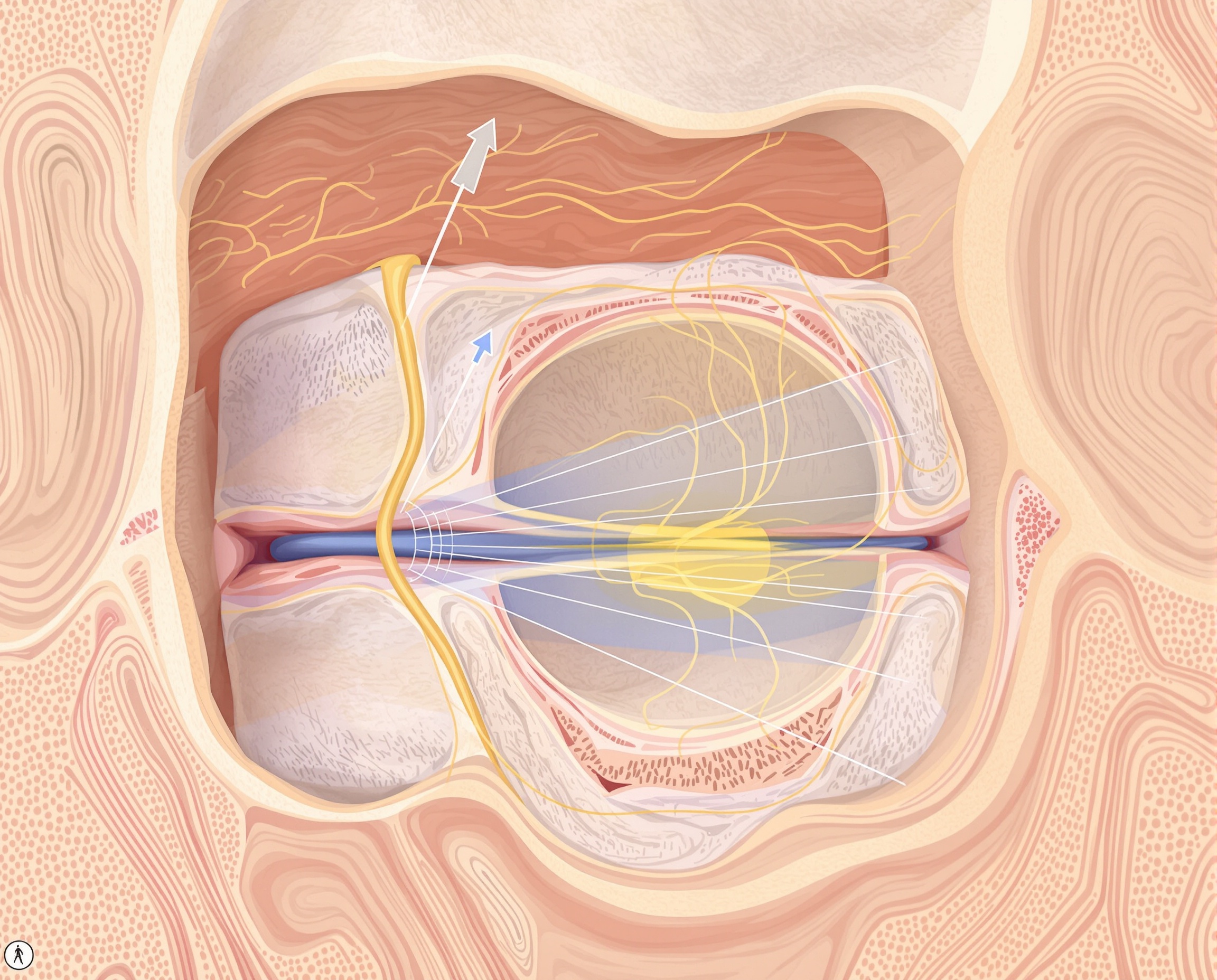
Spinal stenosis is a narrowing of the spinal canal that puts pressure on the spinal cord and nerves. This condition most commonly affects the lumbar (lower back) and cervical (neck) regions of the spine. As the spinal canal narrows, it can compress neural structures, leading to pain, numbness, and weakness that can significantly impact your quality of life.
At Greenberg Spine, we understand that spinal stenosis can be debilitating, especially when it affects your ability to walk or perform daily activities. Our comprehensive approach combines advanced diagnostic techniques with minimally invasive treatment options to provide effective relief while preserving spinal stability.
Symptoms
Neurogenic Claudication
Leg pain, cramping, or weakness that occurs when walking and improves with sitting or leaning forward.
Numbness and Tingling
Loss of sensation or pins-and-needles feeling in the legs, feet, arms, or hands depending on the location.
Balance Problems
Difficulty maintaining balance while walking, especially in cervical stenosis cases.
Muscle Weakness
Progressive weakness in the legs or arms that may affect your ability to perform daily activities.
Causes
Arthritis
Osteoarthritis can cause bone spurs and thickened ligaments that narrow the spinal canal.
Age-Related Changes
Natural aging process causes ligaments to thicken and discs to bulge.
Herniated Discs
Bulging or herniated discs can contribute to spinal canal narrowing.
Congenital Factors
Some people are born with a naturally narrow spinal canal.
Diagnosis
Clinical Evaluation
Dr. Greenberg will assess your walking ability, perform neurological tests, and evaluate your symptoms to identify characteristic patterns of spinal stenosis.
- Walking tolerance test
- Neurological examination
- Symptom pattern analysis
Advanced Imaging
MRI and CT scans provide detailed images of the spinal canal, showing the degree of narrowing and identifying specific structures causing compression.
- MRI for soft tissue detail
- CT for bone structure
- Myelography when needed
Functional Assessment
Evaluation of how stenosis affects your daily activities and quality of life helps guide treatment decisions and measure improvement.
- Walking distance measurement
- Pain scale assessment
- Functional capacity evaluation
Conservative Treatment
Initial treatment for spinal stenosis focuses on non-surgical approaches to reduce symptoms and improve function. Many patients experience significant relief with conservative care.
Physical Therapy
Exercises to strengthen core muscles, improve flexibility, and enhance walking tolerance.
Epidural Injections
Targeted steroid injections to reduce inflammation and provide pain relief.
Medications
Anti-inflammatory drugs, nerve pain medications, and muscle relaxants as appropriate.
Assistive Devices
Walking aids or braces to improve stability and reduce symptoms during activity.
Activity Modification
Adjusting daily activities and using proper body mechanics to minimize symptoms.
Manual Therapy
Chiropractic care and massage therapy to improve mobility and reduce muscle tension.
When stenosis needs surgery
Spinal stenosis typically needs surgery when walking distance drops below one to two blocks despite 3–6 months of dedicated conservative treatment, when leg weakness or numbness is progressive and affecting balance or safety, or when bowel or bladder dysfunction develops — an indication for urgent surgical evaluation and decompression of the compressed nerves. If you are weighing whether your stenosis has reached the surgical threshold, an honest second-opinion consultation can help clarify the decision.
Red flags that point toward surgery
Spinal stenosis tends to progress gradually, and many people manage well without surgery. However, several findings shift the balance toward surgical decompression. The most important red flag is progressive walking limitation — when your walking distance shrinks from several blocks to half a block or less, and leaning on a shopping cart no longer provides enough relief, the stenosis has advanced beyond what conservative care can typically address. New or worsening leg weakness, particularly foot drop or difficulty rising from a chair, signals ongoing nerve compression that may become permanent if not relieved. Bowel or bladder changes — incontinence or retention — represent the most urgent warning sign and require immediate surgical evaluation. Falls caused by leg weakness or balance loss are another serious indicator, as they can lead to additional injuries in patients who already have limited mobility.
When conservative care has been given a fair trial
Conservative treatment for spinal stenosis is typically tried for at least 3–6 months before surgery is considered, unless neurological deficits are rapidly progressing. A fair trial includes structured physical therapy focused on flexion-based exercises and core strengthening, which opens the spinal canal and improves walking tolerance. Epidural steroid injections — often a series of one to three — can reduce inflammation around compressed nerves and provide windows of relief during which therapy is more effective. Activity modification is essential: using a walker or cane, taking sitting breaks during walks, and avoiding prolonged standing or walking downhill. Medications such as gabapentin or pregabalin may help with neurogenic leg pain. If you have done these things and still cannot walk far enough to grocery shop, attend appointments, or enjoy daily life, surgical decompression becomes a reasonable next step.
What spinal stenosis surgery involves
The goal of surgery is to create more space for the compressed nerves — this is called decompression. The most common procedure is a lumbar laminectomy, where a portion of the lamina (the bony roof of the spinal canal) is removed to relieve pressure on the spinal cord and nerve roots. In select cases, an endoscopic approach may be used to perform the decompression through an even smaller opening, potentially reducing muscle disruption and recovery time. If the spine is unstable or if decompression would compromise stability, a fusion may be added — but this is not automatically necessary with every decompression. For cases where fusion is indicated, a TLIF or PLIF procedure may be performed. Most decompression procedures are done in a hospital or surgery center setting, with many patients going home the same day or after an overnight stay. Walking is encouraged immediately, and leg symptoms often improve right away. Desk work can typically resume in 2–4 weeks, with full activity returning gradually over 6–12 weeks depending on the extent of surgery and your pre-operative condition.
Surgical options for spinal stenosis in Fort Wayne
At Greenberg Spine, Dr. Greenberg offers two primary decompression approaches for spinal stenosis that has not responded to conservative treatment. The choice depends on the number of levels involved, the degree of narrowing, whether there is any associated instability, and your overall health and goals. Importantly, most spinal stenosis surgery is decompression only — fusion is reserved for cases where decompression alone would compromise spinal stability. For more on the distinction, see our decompression vs. fusion overview.
Lumbar Laminectomy
The standard decompression procedure — removal of the lamina to create more room for the compressed nerves. Proven effective for central and lateral recess stenosis at one or more levels.
Learn about laminectomyEndoscopic Lumbar Decompression
A minimally invasive camera-guided approach for select stenosis patterns. May reduce muscle trauma and accelerate early recovery compared to open laminectomy.
Learn about endoscopic decompressionNot all stenosis patterns are suitable for every technique. During your consultation, Dr. Greenberg will review your MRI or CT, assess your walking tolerance and neurological function, and recommend the decompression strategy most likely to restore your mobility while preserving spinal stability.
When to Consider Surgery
Surgery may be recommended when conservative treatments have not provided adequate relief and symptoms significantly impact your quality of life or when there are progressive neurological deficits.
Surgical Indications
- Severe walking limitation (less than 1-2 blocks)
- Progressive muscle weakness
- Significant functional impairment
- Failed conservative treatment after 3-6 months
Why Greenberg Spine
Dr. Greenberg specializes in minimally invasive decompression techniques that offer:
- Precise nerve decompression
- Preservation of spinal stability
- recovery times
- Outpatient procedures when possible
Related Procedures
Recovery Expectations
Conservative Treatment Recovery
Weeks 1-4
Initial pain management and gentle exercise program
Weeks 4-12
Progressive physical therapy and walking tolerance improvement
3-6 Months
Ongoing maintenance and symptom management
Surgical Recovery
Days 1-7
Immediate pain relief, early mobilization
Weeks 2-6
Gradual increase in walking distance and activities
Weeks 6-12
Return to normal activities and exercise
Frequently Asked Questions
When does spinal stenosis need surgery?
Spinal stenosis typically needs surgery when walking distance drops below one to two blocks despite 3–6 months of dedicated conservative treatment, when leg weakness or numbness is progressive and affecting balance or safety, or when bowel or bladder dysfunction develops. Surgery involves decompression — creating more space for the compressed nerves — most commonly through a lumbar laminectomy, and in select cases through an endoscopic approach. Most decompression procedures allow same-day or next-day discharge, and walking is encouraged immediately.
What does spinal stenosis feel like?
Spinal stenosis typically feels like heaviness, cramping, aching, or burning in the legs that comes on with walking or standing and eases when you sit down or lean forward. This is called neurogenic claudication — the hallmark symptom of lumbar spinal stenosis. Some people describe it as their legs feeling like concrete or giving out after walking a short distance. Numbness and tingling in the legs or feet are also common.
Can spinal stenosis be treated without fusion?
Yes — the large majority of spinal stenosis cases are treated with decompression alone, without fusion. A laminectomy or endoscopic decompression creates more room for the compressed nerves without joining bones together. Fusion is reserved for cases where decompressing the stenosis would destabilize the spine, such as when there is also spondylolisthesis or scoliosis. For a detailed breakdown, see our guide on decompression vs. fusion. Most patients do not need a fusion.
When should I see a surgeon for spinal stenosis?
You should see a spine surgeon for spinal stenosis when walking distance has dropped below one to two blocks despite 3–6 months of conservative treatment, when leg weakness or numbness is getting noticeably worse, when you have had falls because your legs gave out, or when you develop bowel or bladder changes — which require urgent evaluation. If you are unsure whether your stenosis has reached the surgical threshold, a second-opinion consultationcan help you decide.
Where can I get spinal stenosis treatment in Fort Wayne?
Dr. Marc Greenberg at Greenberg Spine provides spinal stenosis evaluation and treatment in Fort Wayne, Indiana, within the Parkview Health network. He offers conservative guidance, minimally invasive decompression including laminectomy and endoscopic approaches, and honest second-opinion consultations. The practice serves patients from Fort Wayne and across Northeast Indiana and Northwest Ohio. Schedule a consultation to discuss your spinal stenosis treatment options.
What is spinal stenosis?
Spinal stenosis is a narrowing of the spinal canal that puts pressure on the spinal cord and nerves. This can cause pain, numbness, and weakness, particularly in the legs when walking.
What causes spinal stenosis?
Spinal stenosis is most commonly caused by age-related changes including arthritis, thickened ligaments, bone spurs, and herniated discs that narrow the spinal canal. Some people may also be born with a naturally narrow spinal canal.
How is spinal stenosis treated?
Treatment begins with conservative options like physical therapy, medications, and epidural injections. When these fail to provide adequate relief, minimally invasive surgical options like laminectomycan provide effective decompression of compressed nerves.
About this content
This page was written and clinically reviewed by Marc Greenberg, MD, a fellowship-trained spine surgeon who trained at Mayo Clinic, Johns Hopkins, and Brown University, practicing in Fort Wayne, Indiana. Information is for educational purposes only and is not a substitute for medical advice from your physician.
This is general educational information, not medical advice. Symptoms vary by person — a clinical evaluation is the only way to know what's right for you.
Related Topics
Learn more about related conditions and treatments
Lumbar Laminectomy
Lumbar Fusion (TLIF/PLIF)
Spondylolisthesis
Sciatica Guide
Why Your Legs Hurt When You Walk
Spinal Stenosis: Fort Wayne Guide
Stenosis Surgery vs. Injections
Spine Surgery Second Opinion in Fort Wayne
Request a Second Opinion
Ready to Improve Your Walking Ability?
Schedule a consultation with Dr. Greenberg to explore your treatment options for spinal stenosis.
Schedule Consultation