Key points from this video
- Ask for the exact diagnosis and structure being injected rather than accepting “back pain” as the target.
- Ask which studies apply to people with your condition and whether the proposed technique matches those studies.
- Clarify total out-of-pocket cost, number of treatments, expected duration of benefit, and the plan if there is no improvement.
- Be cautious with guarantees, dramatic “regeneration” claims, or pressure to purchase a package immediately.
What this video can—and cannot—tell you
Regenerative language can sound more certain than the evidence. A responsible discussion distinguishes early or mixed evidence from established benefit and does not imply that an injection regrows a normal disc, reverses stenosis, or guarantees avoidance of surgery.
This is general educational information, not medical advice. Symptoms vary by person — a clinical evaluation is the only way to know what’s right for you.
Full video transcript
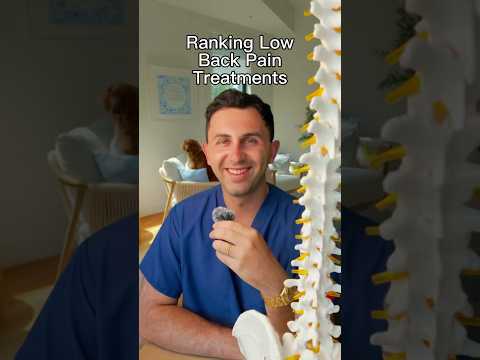
Stop wasting your money on PRP injections for your spine. I'm Dr. Greenberg, a minimally invasive spine surgeon based here in Fort Wayne, Indiana. Here's the actual evidence for disc injections. The evidence is bad. There was a small trial of PRP that was encouraging, but the largest randomized control trial of 89 patients found no advantage after a year. Is that promising? Probably not. Is it proven? Absolutely not. These injections are usually cash pay because insurers consider them unproven and PRP is not FDA approved for back pain. Serious complications have also occurred including spondylodiscitis which is the infection of the bone in the adjacent discs. If PRP worked I could make a lot of money offering it but there just isn't convincing proof that it does. And as a spine surgeon trained at some of the best hospitals in the world my best advice is don't get married to a procedure. Instead, I want you to focus on the outcome you want, what's going to get you there, and most importantly, who can help you. You don't want PRP. You want to feel better and hopefully without spending a bunch of your own money and ending up the exact same way you started. I took an oath to do no harm. That's why I don't offer intradiscal PRP. I want my patients to get