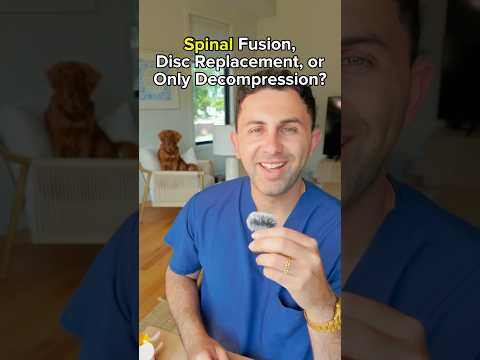
Key points from this video
- Videos translate common spine questions into plain language patients can revisit and share.
- General education cannot replace a history, examination, and review of the actual imaging.
- The channel covers symptoms, nonsurgical care, surgical choices, recovery, and how to judge medical claims online.
- Patients can use the related website guides for more complete context and sources.
What this video can—and cannot—tell you
Online education is most useful when it helps a patient recognize a pattern, ask a sharper question, or prepare for a real clinical conversation. It should show the limits of a claim, distinguish education from advice, and make room for “you may not need surgery.”
This is general educational information, not medical advice. Symptoms vary by person — a clinical evaluation is the only way to know what’s right for you.
Full video transcript
Hey, this is Dr. Greenberg. I just wanted to take a minute to introduce myself in my new practice here in Fort Wayne, Indiana. I'm a minimally invasive spine surgeon and my goal is to get you back to living your life your way out of pain. I've been fortunate enough to train at some of the best institutions in the world like the Mayo Clinic, Johns Hopkins, and Brown University where I did a spine fellowship in minimally invasive spine surgery as well as adult complex deformity. Anything that you end up needing from large surgeries to the most minimally invasive options, we can do for you. I'm looking forward to meeting you in person. Can't wait to see you soon.