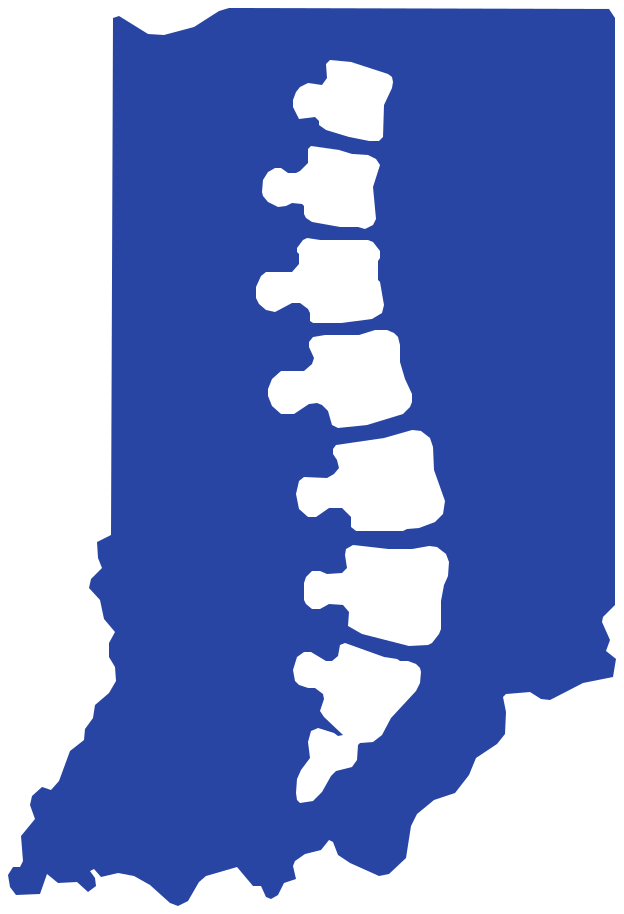
Key points from this video
- Decompression is intended to relieve pressure on a nerve or the spinal cord; it does not automatically require a fusion.
- Disc replacement is a motion-preserving option for selected anatomy, not a substitute for every fusion.
- Fusion may be appropriate when instability, deformity, or the required decompression would otherwise leave the segment unstable; pain or stenosis alone does not automatically require fusion.
- A good recommendation explains why the proposed operation matches your symptoms and anatomy—and which reasonable alternatives were considered.
What this video can—and cannot—tell you
An MRI finding does not select an operation by itself. The same word on an imaging report can lead to different recommendations depending on which nerve or spinal-cord structure is affected, whether the segment is stable, where the pain travels, and what the examination shows.
This is general educational information, not medical advice. Symptoms vary by person — a clinical evaluation is the only way to know what’s right for you.
Full video transcript
How does a spine surgeon know when to fuse your spine, replace the disc, or just do a decompression? Well, once we decide together that surgery is appropriate, I think about three things: alignment, stability, and decompression. First off, with alignment, I look at what the shape of your spine is and how the operation is going to affect it and whether it should. Second, in terms of stability, I think how much bone or ligament can I remove without making your spine unstable. If your spine's already unstable or freeing the nerves is going to destabilize it, then I might think fusion. If alignment and stability are good and the anatomy allows it, I may be able to replace the disc instead of fusing it or just do a decompression, which takes us to our third point. In terms of decompression, I ask, "Can I safely and completely take the pressure off the nerve or spinal cord causing your symptoms? And how am I going to do that?" My job is to choose the operation that solves the problem while preserving as much normal muscle, motion, and anatomy as possible.


