Key points from this video
- Nonsurgical care is often reasonable when symptoms are stable and no urgent neurologic or structural problem is present.
- A treatment trial should have a purpose and a way to judge whether it helped—not just satisfy a checklist.
- Imaging must be matched to symptoms and examination findings before it becomes an operative target.
- Before consenting, ask what improvement the operation is most likely to deliver, what it is less likely to change, and what alternatives remain.
What this video can—and cannot—tell you
“Try everything first” is not a safe rule, but neither is “an MRI abnormality means surgery.” A decision should account for symptom severity, function, neurologic findings, time, prior treatment, structural risk, and whether an operation has a clear goal that matters to the patient.
This is general educational information, not medical advice. Symptoms vary by person — a clinical evaluation is the only way to know what’s right for you.
Full video transcript
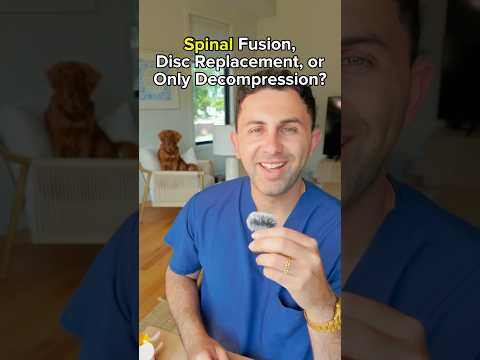
Three things you should try before spine surgery. Look, I make money doing spine surgery, but when it's safe to wait, here are the three things I want almost every single patient to try first. I'm Dr. Greenberg and I'm a minimally invasive spine surgeon based here in Fort Wayne, Indiana. First, give physical therapy a real chance. A structured program can improve strength and movement and it may get you better without even needing to consider surgery. Second, use a multimodal pain plan. That means combining multiple different medications and treatments that are safe for you and work in different therapeutic ways instead of expecting one pill to solve everything because it probably won't. Third, if your pain comes from an irritated nerve, ask whether an epidural steroid injection makes sense. It's not the right thing for every spine problem and it's certainly not a cure for everything, but for the right patient, it may reduce pain long enough around the nerve root to make progress in therapy. But, if you do end up needing surgery, my job is to help you choose the least invasive procedure that has the best chance of addressing the actual problem and getting you back to living your life with as little unnecessary trauma as possible.